Push-fit plumbing fittings, also known as push-to-connect fittings, are a game-changer for DIY enthusiasts and homeowners. They are fast and easy to install, require very few tools, and do not require soldering. They are popular in both copper and plastic plumbing systems.
While connecting push-to-connect fittings sounds easy, when you need to adjust, replace or repair a connection, releasing them can sometimes feel like solving a puzzle. Understanding how to release these quick-fitting connectors is as important as knowing how to install them. It ensures you can make adjustments or repairs when needed. In this guide, we’ll explain how push-to-connect fittings work and how to release them properly. If you are ready to start your next project, PlumbingSell offers reliable and practical plumbing products to help make your projects easier and more efficient.
What Are Push to Connect Fittings?
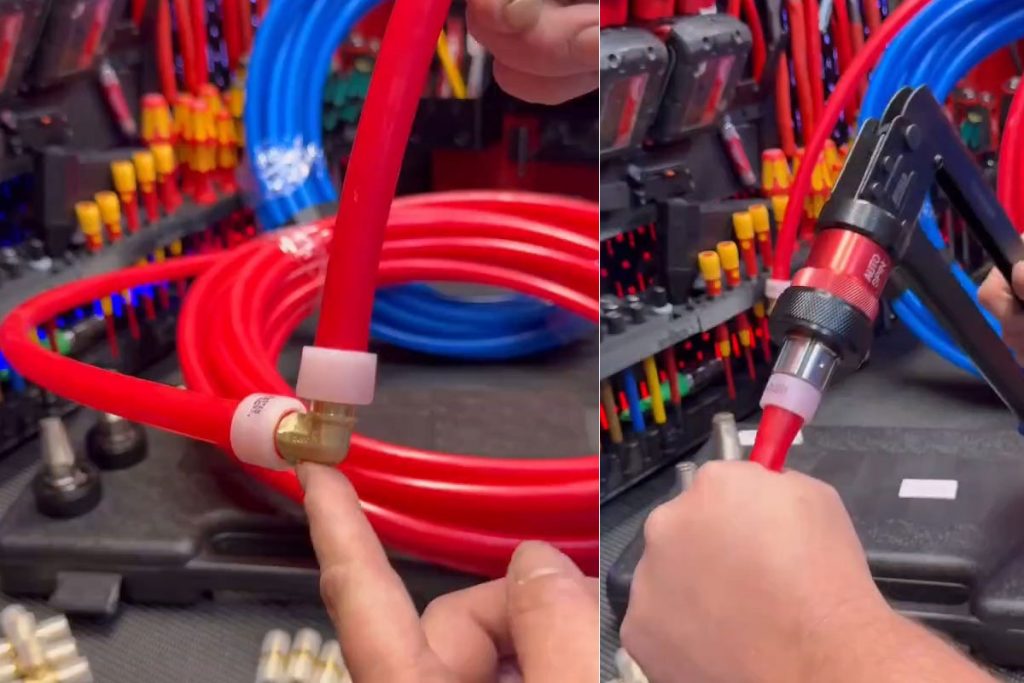
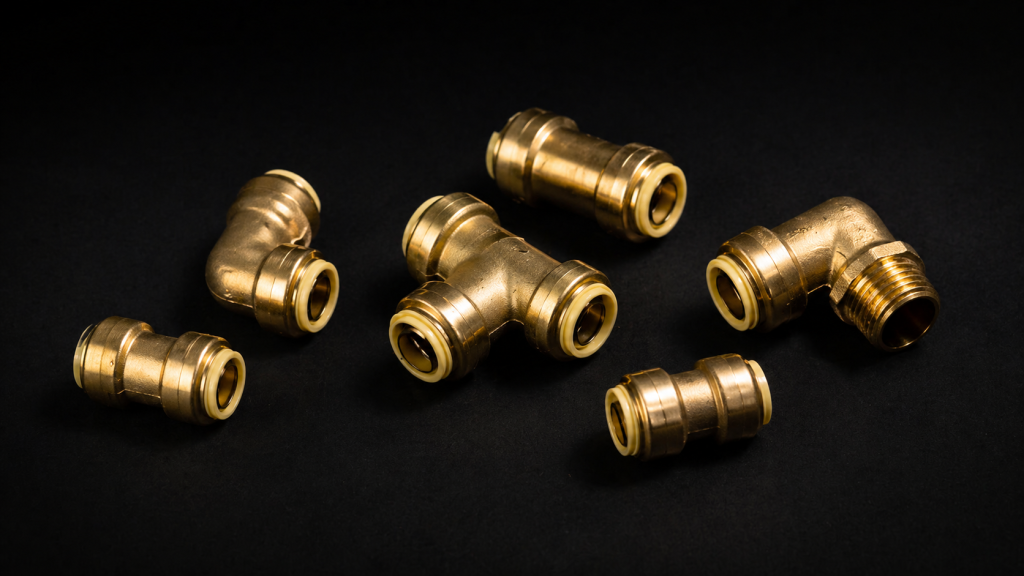
Push-to-connect fittings, also known as push fit fittings, are designed to join pipes without soldering, threading, crimping or using adhesives. They are often used as pipe connector fittings for copper, PEX and CPVC pipes, depending on the fitting’s compatibility. The main advantage of push fit fittings is fast installation, convenience and ease of use. This kind of quick fitting connector is useful for appliance lines, fixture supply lines or other residential water connections.
Inside these push-to-connect fittings, there is an O-ring seal and a gripping mechanism to secure the pipe in place and provide a watertight seal to prevent any potential leaks. When the pipe is inserted, the internal teeth grip the outside of the pipe while the O-ring creates a seal. The design of push-to-connect fittings makes them especially useful for quick connections for water lines, under-sink plumbing or small repair projects where speed and convenience matter.
Tools and Accessories Needed to Release Push Fit Fittings
To remove push-fit fittings properly, specific tools are required to ensure precision and safety. The most important item is a disconnect clip or tong designed for the fittings. This tool is also known as a quick-connect fitting removal tool. The purpose of the tool is to press the release collar evenly so the internal gripping teeth detach from the pipe with ease.
Besides the removal tool, it is also helpful to have tools like pipe cutters and deburring tools. A pipe cutter helps if you need to cut back a scratched or damaged pipe end. A deburring tool smooths the edge of the pipe before it is reused or reinserted into another fitting. These tools help prepare the fittings and pipes for a secure seal for either reattachment or new installations.
Disconnecting a Push-Fit Connection
Now you’ve learnt more about what a push-fit fitting is and how it works, it’s also important to know how to disconnect it. Following these steps for a secure and fast disconnection.
Step 1: Safety and Preparation
Before disconnecting any push-to-connect connection, turn off the water supply. This step is important because even a small pressurised line can release water once the fitting comes loose. After shutting off the supply, open a nearby faucet to relieve any remaining pressure and drain leftover water from the line.
Step 2: Locate and press the release collar
Next, locate the release collar on the fitting. This is usually the small ring or sleeve where the pipe enters the fitting. Slide the quick-connect fitting removal tool over the pipe and press it firmly against the collar. The collar is the part that releases internal gripping teeth, so it lets go of the pipe.
Step 3: Pull the pipe straight out
While keeping the removal tool against the collar, gently pull the pipe straight out of the fitting. Avoid twisting aggressively, bending the pipe or pulling at an angle, as this can scratch the pipe or damage the fitting’s internal seal. If the pipe feels stuck, push it slightly inward first, then press the collar again to loosen the grip before removal.
Step 4: Inspect the pipe and fitting before reconnecting
After the fitting is removed, inspect the pipe end and the fitting carefully. Look for scratches, rough cuts, debris or damage to the O-ring. If the pipe end is damaged, cut it back to a clean section and deburr it before reconnection. A smooth and square cut is important for creating a secure, leak-free connection. If the interior of the fitting is damaged, replace it with a new one instead of keeping the damaged one to prevent potential leaks.
Can You Reuse Push Fit Fittings?
In many cases, push-fit fittings can be reused, but only if both the fitting and pipe are still in good condition. Most push-to-connect fittings are designed to be demountable and reusable. However, before reusing the fitting, it is essential to check if the O-ring, release collar and internal grip ring are working properly. If the O-ring is cracked, dirty, loose or deformed, the fitting should be replaced rather than reused.
The fitting body also needs to be checked. Dirt or pipe shaving inside the fitting can affect the seal. If the fitting looks clean and undamaged, it may be suitable for reinstallation. The pipe also matters. Even if the fitting is still in good condition, a scratched or uneven pipe end can cause potential leaks. Before reinstalling any push-to-connect fittings, make sure the pipe is cut square, deburred, and fully inserted to the proper depth.
Conclusion
Push-to-connect fittings are popular for a reason. They make pipe connections faster, cleaner, and easier for both DIY projects and professional repairs. However, removing them correctly is just as important as installing them properly. Before reusing any push-fit fittings, always inspect the O-ring, grip ring, fitting body and pipe end carefully. If anything looks worn, scratched, cracked or dirty, replacing the fitting is usually recommended. A clean, square and properly prepared pipe end is key to creating a reliable and leak-free connection.
Whether you are adjusting a water line, replacing old pipe connection fittings or preparing for a new project, the right tools and fittings always make the job much easier. For practical plumbing supplies, quick fittings and everyday repair parts, PlumbingSell offers reliable options to help homeowners and plumbing pros to complete water line projects confidently.