If you’ve ever turned off a faucet or washing machine and heard a loud banging or thudding noise in your walls, you’ve likely experienced water hammer. It is one of those plumbing issues homeowners tend to ignore-until the banging becomes impossible to overlook. The sharp thud behind walls isn’t just a disturbing noise; it’s a pressure shocking moving through your pipes at high speed. Over time, the repeated force can loosen fittings, valves and shorten the lifespan of your plumbing system.
Understanding where water hammer arrestors should be installed will help you protect your infrastructure. In well-designed plumbing systems, shock absorption isn’t optional—it’s a must-have. In this guide, we’ll provide brief information that helps you understand what a water hammer arrestor is and why you need it. For homeowners and contractors looking for reliable components, PlumbingSell provides a wide selection of certified water hammer arrestors to meet your needs.
What Is a Water Hammer Arrestor?
Before addressing the placement, it is important to understand what exactly a water hammer arrestor is. A water hammer arrestor, also known as a plumbing hammer arrestor, is a mechanical device engineered to absorb pressure spikes that occur when water flow suddenly stops. The water hammer arrestor consists of a chamber in which air is present, which gives a cushion-like feel to water.
When water flows quickly, such as a quick-closing valve inside a washing machine or a dishwasher shuts abruptly, the moving water has nowhere to go, and the pressure converts into a shock wave. Without relief, the shock travels through the pipe system and causes stress on joints and fittings along the way. When the water is redirected to the water hammer arrestor, the spring or air inside the chamber within the arrestor will be compressed because of the water pressure. The filled air or spring will then absorb the pressure before it reverberates through the plumbing network, resulting in no banging noise or any vibration.
Why Is A Water Hammer Arrestor Important?
Although the water hammer doesn’t feel like a big issue in the beginning, the water hammer actually isn’t just a noise problem; it’s more of a structural stress issue. Each shock event within the piping system adds strain to joints, fittings and shut-off valves. In newer homes with PEX systems, the material’s flexibility can dampen vibration caused by water pressure slightly, but pressure spikes still occur. Below are the reasons why installing a water hammer arrestor properly is crucial:
Extended valve lifespan and appliance protection
Modern appliances rely heavily on rapid shut-off valves that function best within controlled pressure ranges. When pressure spikes are absorbed at the source, shut-off mechanisms like shut-off valves operate under stable conditions. This reduces internal wear on seals and moving components, helping fixtures and appliances perform consistently over a longer service time.
Improved joint and fitting integrity
All plumbing systems rely on the strength of their connections. Different types of fittings, such as threaded fittings, compression joints or crimped PEX connections, are all designed to perform under steady pressure, not repeated shock waves. When a water hammer arrestor is installed properly in position, it absorbs the force before it travels through branch lines. This significantly reduces the cyclical expansion and contraction that occurs at connection points during pressure spikes. Over time, this helps minimise the stress on the joints and fittings, therefore maintaining a consistent performance under normal operating conditions in a plumbing system.
Long-term plumbing durability
Water hammer often affects various parts within the plumbing system. Without proper shock absorption, the subtle pressure might stress across the network. Installing a hammer arrestor at the proper place introduce localized shock control that prevents this ripple effect. The outcome is a smoother hydraulic transition whenever water flow stops, reducing vibrations and minimising pipe movement. Over time, this stability translates directly into durability, hence helping the system be more efficient, reliable and durable.
Where Should Water Hammer Arrestors Be Installed?
Water hammer arrestors are not required everywhere in the home; the most accurate answer to this question is: at the point of sudden shutoff. The installation place should be as close as physically possible to quick-closing valves, which are known as the primary source of residential pressure spikes. These commonly include appliances like washing machines, dishwashers, ice makers and certain toilet fill valves.
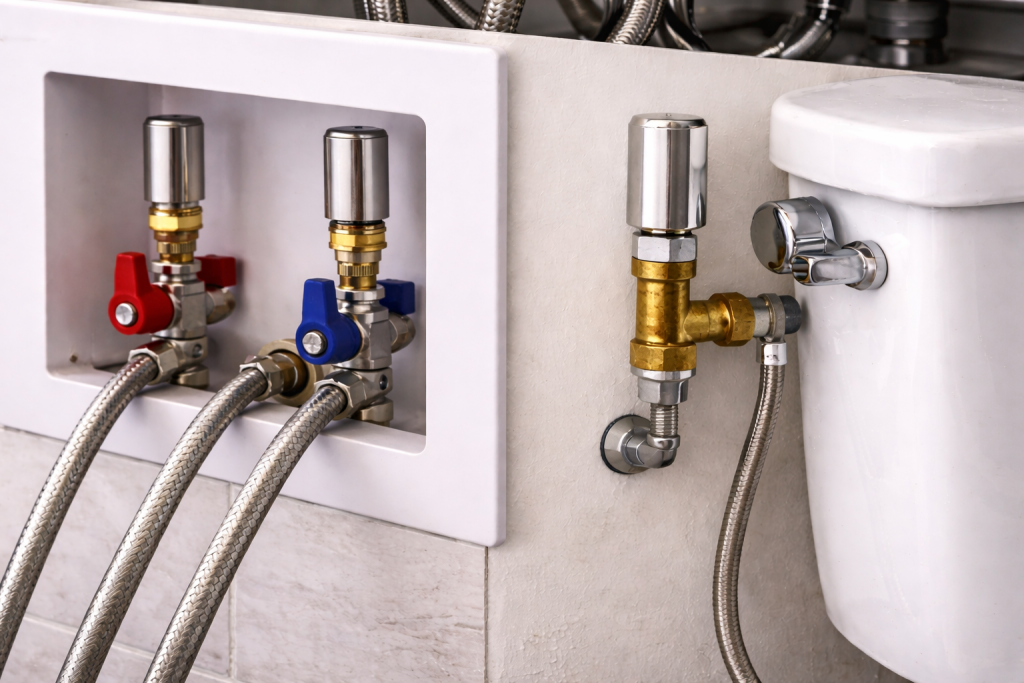
Washing machines are one of the most frequent sources of hammer noise; therefore, arrestors should be installed on both hot and cold supply lines, ideally within the washer outlet box. EFIELD has provided some washer outlet boxes with hammer arrestor options. For kitchens, compact arrestors can be positioned under sinks or directly behind appliances like dishwashers.
Modern toilets typically come with shut-off valves that stop the water rapidly. This may cause serious water hammer. In this case, you can install a water hammer arrestor at the shut-off valves or where fast-fill mechanisms create noticeable banging.
Homeowners often ask, how many water hammer arrestors do I need? The answer is not fixed; it depends on how many quick-closing fixtures are present and the number of appliances in your place. It is suggested that one per problematic fixture is standard practice, but you can adjust the amount based on your requirements.
Conclusion
Water hammer may start as a minor annoyance, but over time, it can impact the stability and longevity of the entire plumbing system. The key takeaway is straightforward: water hammer arrestors should be installed as close as possible to the source of sudden shutoff fixtures. Quick-closing valves in washing machines, dishwashers, fridges and modern toilets are the most common pressure spike generators. Placing arrestors at these points helps absorb the shock before it travels through branch lines and fittings.
If you are planning to upgrade your plumbing system, choosing certified, properly sized components is essential. PlumbingSell offers a wide selection of high-quality water hammer arrestors designed for different fixtures, making it easier for both homeowners and professionals to find reliable solutions in one place.