When it comes to modern kitchen applications, refrigerators with ice makers stand out as an essential innovation. A traditional fridge can run without a water line, but if it has an ice maker or a built-in water dispenser, it typically requires a connected ice maker line to function properly. Without a water supply, the fridge will still keep the food cold, but the ice maker will not be able to make ice automatically.
For homeowners installing a new refrigerator, replacing an old ice maker hose, or upgrading a kitchen, it is useful to understand how ice makers work, what type of ice maker supply line is needed and what size line is commonly used. This guide will reveal exactly when a water connection is necessary and how to choose the ice maker supply line to help you make smart choices for your kitchen. If you are preparing for a fridge installation, PlumbingSell is a convenient place to find proper plumbing supplies.
How Do Ice Makers Work?
Indoor ice makers are convenient and space-saving devices as they are placed directly inside the fridge, providing easy access to ice. An automatic ice maker works by using water from your home’s plumbing system. When the ice maker is turned on, water flows through a small ice maker line into the fridge’s ice mould. The freezer then freezes the water into cubes. Once the ice is ready, the ice maker releases the cubes into the storage and repeats the cycle as needed.
The ice-making process depends on a steady water supply, which makes the ice maker supply line connected to a shut-off valve crucial for most refrigerators with built-in ice makers. If the line is not functioning properly, you can simply replace it with a new line instead of repairing the other parts of the fridge.
What Is an Ice Maker Water Line?
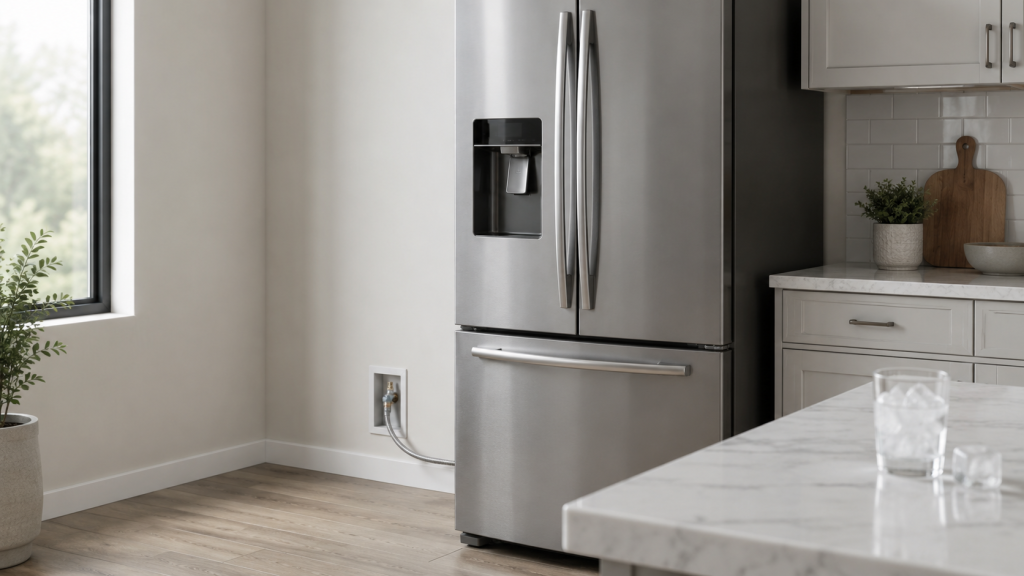
An ice maker water line is the small tube or hose that connects the fridge to your home’s water supply. It is usually connected to a valve behind the refrigerator, under the sink, or inside a nearby cabinet. Common options for ice maker lines include plastic tubing, copper tubing and braided stainless steel hose.
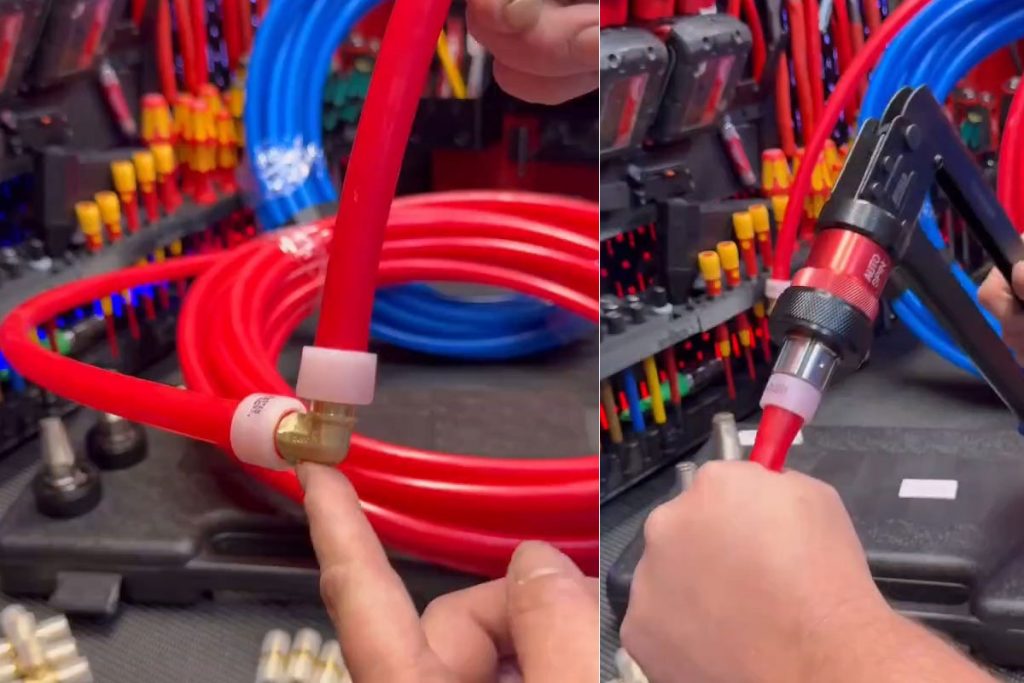
The line connects to the fridge through an ice maker water line connector. Depending on the setup, the connector could be a compression fitting, push-to-connect fitting, or other compatible fitting connector types. When buying an ice maker water line connector, the most important thing is to match the connector size and fitting type to both the refrigerator and the shut-off valve.
Do You Really Need a Water Line?
The need for a refrigerator water line depends on usage. If you want the fridge’s automatic ice maker or water dispenser to function, it’s a must-have. If your fridge has no ice maker or uses manual ice trays, then a direct plumbing connection may not be necessary. You may also need an ice maker water supply line replacement if the existing line is old, leaking, kinked or incompatible with your new fridge.
When replacing a refrigerator, it is often a smart idea to replace the old ice maker hose at the same time. A new supply line is inexpensive but can help a lot in reducing the risk of leaks behind the appliance. You may notice slow ice production, small or hollow ice cubes, or water behind the refrigerator. These are the potential signs of a replacement of an ice maker water line.
What size line is used when installing a refrigerator water line?
The most common ice maker water supply line size is 1/4 inch. This is often described as a 1/4 ice maker line, meaning the tubing has a 1/4-inch outside diameter. This size is standard for many residential refrigerator ice makers because the appliance only needs a small amount of water at a time. The ice mold are filled slowly and consistently, so a large pipe is not essential for filling it up.
Before purchasing an ice maker water line connector or supply hose, it is crucial to check the refrigerator’s installation guide. Although most refrigerators use a 1/4 -inch cmpression connection, the exact fitting type and size vary depending on the model and existing shut-off valve.
How to Install a Refrigerator Water Line the Right Way?
A proper ice maker water supply line installation starts with checking whether there is already a cold water shut-off valve near the refrigerator. If a valve is already installed near the fridge, the process may be simple. You can connect the 1/4 ice maker line from the valve directly to the refrigerator, tighten the fittings, turn the water back on and check carefully for potential leaks. If there is no existing water connection, installation may require tapping into a nearby cold water pipe and adding an extra shut-off valve. This is where the job could become more complicated.
For a clean and professional installation, avoid sharp bends or kinks in the tubing. It is helpful to leave some extra slack behind the fridge so you can pull the appliance out for cleaning or maintenance without straining the connection. Ensure the ice maker water supply line connector is snug and secure, but be careful not to overtighten compression fittings, as this can crush the seal and lead to slow leaks later on.
After connecting the line, flush the water supply if recommended by the refrigerator manufacturer. Then turn on the ice maker and monitor the first few cycles to check if everything functions properly. Keep in mind to check behind the fridge, around the valve, and at every connector for leaks.
Conclusion
A fridge only needs the ice maker water line when you want the automatic ice maker or water dispenser to work properly. For most residential refrigerators, a 1/4 ice maker line is the standard choice because the amount of water required for an ice maker is quite limited. Choosing the right ice maker supply line, connector, and shut-off valve can help prevent slow ice production, leaks and installation issues.
Whether you are setting up a new refrigerator, replacing an old ice maker hose or planning an ice maker line replacement, always check your fridge’s installation guide and make sure the fittings match your existing plumbing. For homeowners preparing for a fridge upgrade, PlumbingSell offers practical plumbing supply options to help complete the installation with the right parts.