You may be familiar with the small shut-off valves under your sinks that control fixtures, but do you know about the master switch for your entire home’s plumbing system? The main water shut-off valve is your ultimate defence against a major plumbing issue or emergency. Knowing how main water valves and the small shut-off valves work can help you handle leaks, repairs, renovations and emergencies with more confidence.
So, should the main water valve be open all the way? During normal use, the main water shut-off valve should usually be fully open so water can flow properly through the plumbing system. The same idea often applies to smaller fixture valves, such as an angle stop valve or an angular stop valve. For homeowners, DIYers and contractors looking for reliable supplies, PlumbingSell offers a practical selection of stop valves, fittings, and repair parts for your plumbing projects.
What Is Your Main Water Shut-Off Valve?
Your main water shut-off valve is the master control for water entering your entire home. When it’s open, water flows from the municipal supply or well system into your pipes. When it’s closed, water stops flowing to the whole house.
The main water valve can stop the supply to every faucet, toilet and appliance. It is different from a local stop valve. A local stop valve only controls water to one fixture or appliance. These smaller ones are often known as fixture shut-off valves or angle stop valves. There are different water stop valve types used in homes, such as ball valves, gate valves, stop valves and angle stop valves.
How to Find Your Main Water Shut-Off Valve
Knowing where your main water shut-off valve is located is important, especially when a pipe bursts or a fixture fails suddenly. To find your main water shut-off valves, start by looking where the water service line enters your home. In most houses, it is near the front foundation wall, basement, crawl space, garage or utility room.
If your home has a water meter inside, the main shut-off valve is often located close to the meter. However, in some homes, there may be one shut-off valve before the meter and another after the meter.
Where is the main water valve located?
The main water valve location depends on your home’s design, location, climate and plumbing layout. In colder areas, the valve is often indoors to protect it from freezing. You may find it in a basement, mechanical room or utility closet. It is commonly installed on the wall closest to the street or near the point where the main water line enters the house. In warmer areas, the valve may be outside near an exterior wall, in an underground meter box or close to the curb. If the valve is inside a meter box, you may need a meter key or valve tool to access it safely.
While in condos, apartment buildings, and townhouses, there may be many control valves to help manage the shared plumbing system. For example, an apartment building normally has a large control valve that controls the entire building. In these cases, there may be smaller control valves that determine water flow to different sections of the structure. You can probably find them outside your unit, near the water heater or in the laundry room, closet or kitchen cabinet.
When Should You Shut Off the Main Water Valve?
Knowing when to shut off the main water valve is as important as knowing where it is located. Think of it as your home’s emergency brake. You should turn off your water when there is a plumbing emergency, an active leak, a burst pipe, a major repair or a fixture replacement that cannot be isolated by a local valve.
For smaller jobs, you may not need to close the main valve. For example, if you are replacing a faucet or toilet supply line, closing the nearby angle stop valve or sink valve may be enough. This allows the rest of the home to keep running while you work on one fixture.
In general, you may need to turn off the main water valve if a pipe bursts, a leak becomes serious, or if you are repairing a main supply line or leaving home for an extended trip. Shutting off the main valve gives you better control and helps prevent water damage while the work is being done.
How to Safely Turn Your Water Off (and On Again)
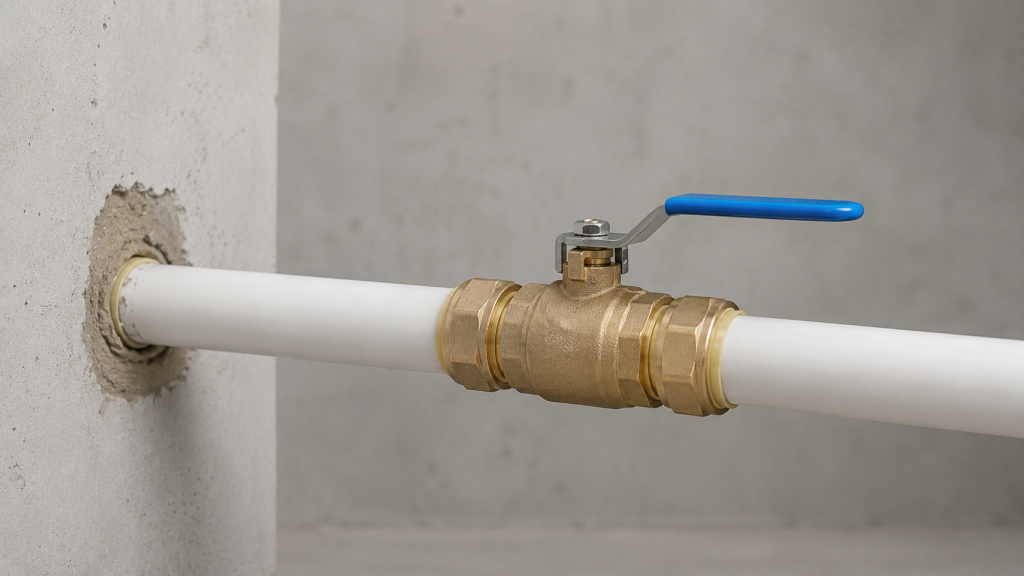
Before turning off the main water valve, make sure you know what type of valve it is and how to operate it properly. The most common ones are the ball valve and the gate valve. For a ball valve, turn the lever handle a quarter turn until it is perpendicular to the pipe. When the handle is parallel with the pipe, the valve is open. When it is perpendicular, the valve is closed.
For a gate valve, turn the round handle clockwise to close it. Do not force it if it feels stuck, as older gate valves can break internally. To open it again, turn the handle counterclockwise until it is fully open.
If you are shutting off the main water supply for maintenance or repair, after shutting off the main water valve, open a faucet or a valve at the lowest level to relieve pressure and drain some water from the pipes. This can make repairs cleaner and safer.
When turning the water back on, open the valve slowly. This helps reduce sudden pressure shock in the pipes. Then check nearby fixtures, supply lines, and valves for leaks. If you replaced an angle stop valve or fixture stop, inspect the connection carefully before leaving the area.
Conclusion
The main water valve should usually be open all the way during normal use so water can move properly through your home’s plumbing system without unnecessary restriction. Knowing how to shut it off properly and when to shut it off is just as important, especially during leaks, burst pipes, major repairs or extended trips away from home. This can also help you better protect your home from water damage and handle basic plumbing maintenance with more confidence.
Whether you are checking your main valve, replacing an old fixture stop or upgrading plumbing parts around your home, choosing reliable valves and fittings makes the job easier and safer. For practical plumbing supplies, stop valves, fittings and repair parts, PlumbingSell can be a helpful source for both DIY projects and everyday plumbing maintenance.